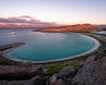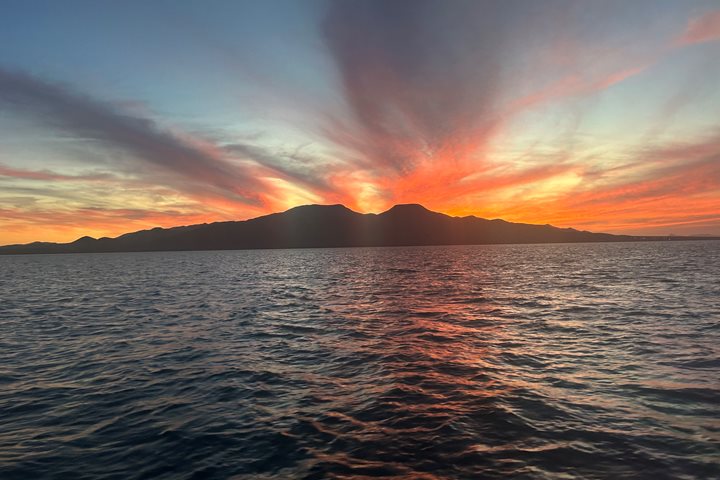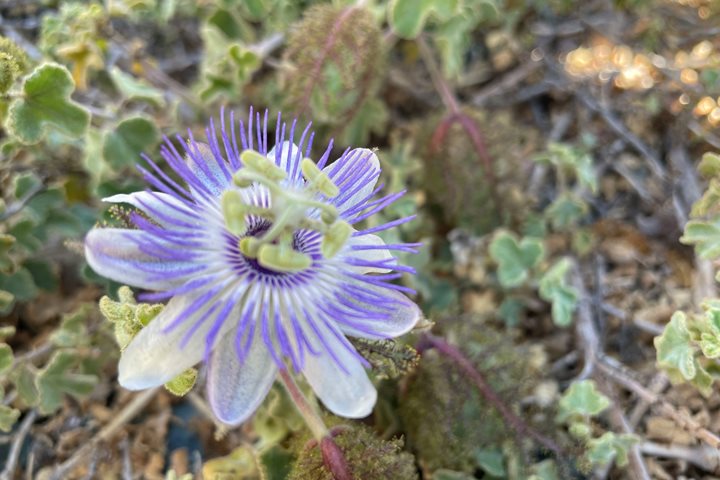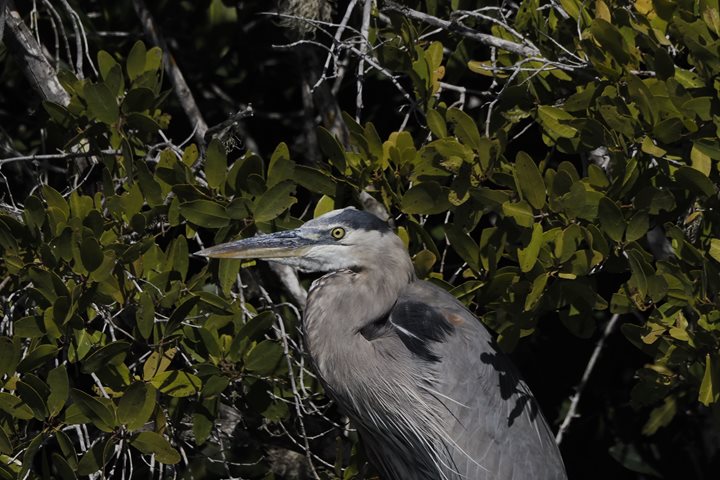
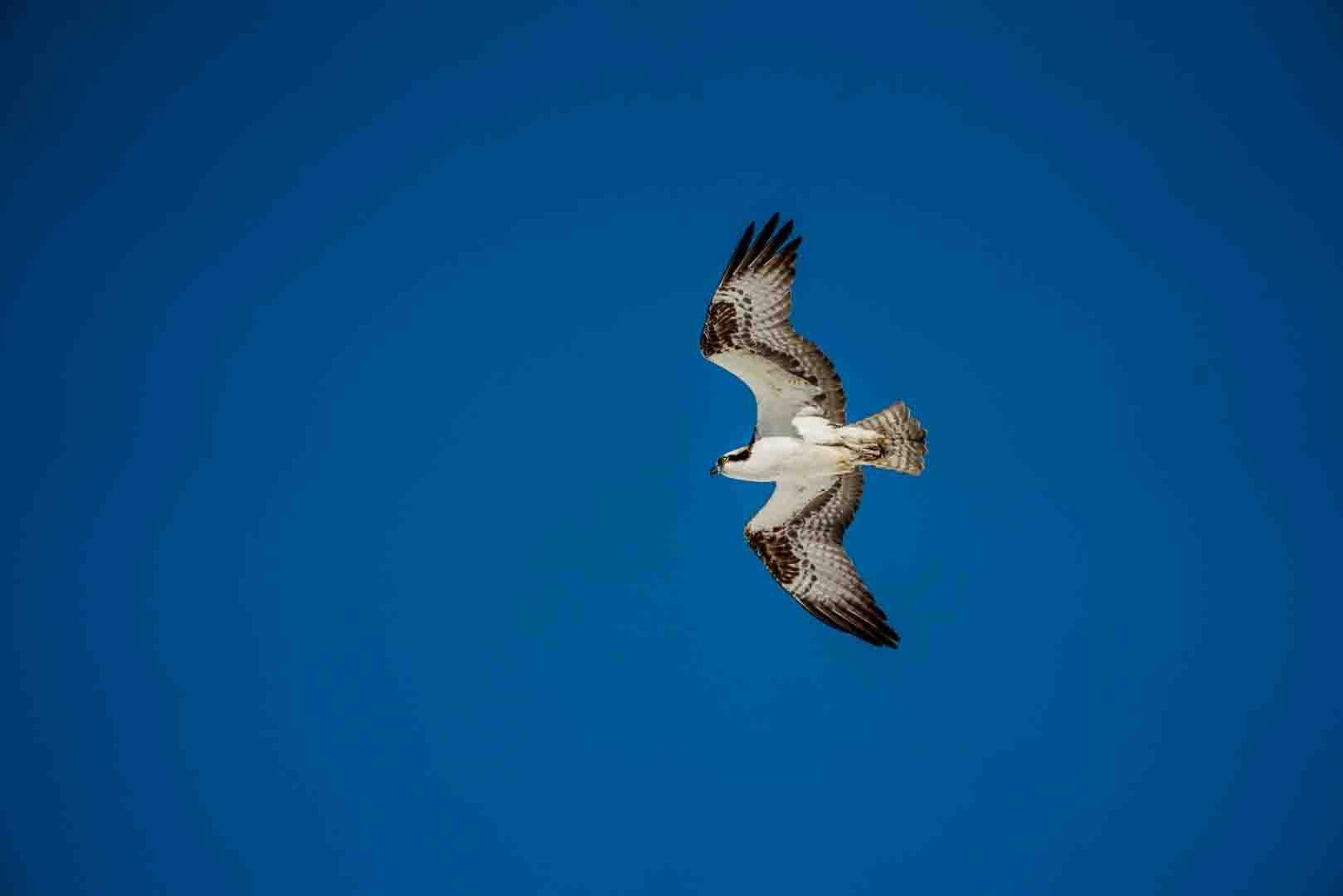
This glorious bay is famous for the gray whales that make their way here from feeding grounds thousands of miles to the north. But the whales are not the only spectacle that make this place so unique and special. There are also sprawling mangroves teeming with seabirds and shorebirds as well as sand dunes full of diversity in spite of dry, harsh conditions. Today, we sailed from the southern-most inlet of Magdalena Bay to the Bay’s northern extent, exploring the other biological wonders the area has to offer along the way. Throughout the morning we transited the narrow passageway of the Hull Canal and got close views of ospreys, pelicans, and coyotes, among others. Our destination was an anchorage just off the small fishing town of Lopez Mateos that offered us yet another opportunity to board our Zodiacs in search of gray whales and land on the beaches to explore the sand dunes. Guests took the entire afternoon to search this northern side of Magdalena Bay for wildlife and were not disappointed. With encounters of more gray whales and wide range of different shore birds and sea birds, we are beginning to understand the full story of Bahia Magdalena and its diversity.
- Daily Expedition Reports
- 24 Jan 2020
Magdalena Bay , 1/24/2020, National Geographic Sea Lion
- Aboard the National Geographic Sea Lion
- Baja California

Alex Krowiak, Naturalist/Certified Photo Instructor
A childhood surrounded by the woods and streams of Pennsylvania initially sparked Alex’s curiosity about nature. That curiosity eventually led him to pursue degrees in biology and environmental studies at Boston College. During his time there he cond...
Read MoreShare Report
Baja California: Observing the Whales of Magdalena Bay
VIEW ITINERARYRelated Reports
3/15/2025
Read
National Geographic Sea Bird
Puerto Magdalena
Walks in the desert can hold a plethora of surprises, and today was no exception. From clusters of scarlet Palo Adan flowers, the gems of the morning, to purple and white striped passion flowers. The numerous fruits on the vine attested to a series of flowers earlier this month. A diminutive bird, the verdin, was also interested in the Palo Adan flowers. The verdin’s short beak cannot reach the nectar, so this bird approaches the base of the flower, nips it open, and takes a nectar reward; pollination of the flower is thwarted in this thievery. The exoskeleton of a tarantula was found under the scrub, an indication of a spider that has molted and grown a bit bigger. At the end of the trail, we were all rewarded with a magnificent view of the Pacific Ocean. Good things come to those who venture outdoors.
3/14/2025
Read
National Geographic Sea Bird
Boca de la Soledad
Today we woke up in the northernmost part of Magdalena Bay. In the morning, we went whale watching at Boca de la Soledad, where we came across a mother and calf. Later, we went to Estero Chivo at high tide, where we observed a variety of birds. We were particularly interested in the numerous shorebirds, egrets, and herons. We raised anchor to continue our day. While transiting Hull Canal, we spotted bow-riding bottlenose dolphins. National Geographic Sea Bird set anchor in front of Magdalena Island. The wind was blowing, causing the dunes to come alive. After walking among dunes and desert plants, we arrived at the Pacific coast of Magdalena Island. We enjoyed walking along the beach and observing various shells, snails, and sand dollars. In the distance, we spotted the carcass of a beached gray whale and contemplated both life and death. These animals begin their lives on the coast of Mexico, and their cycle also ends here.