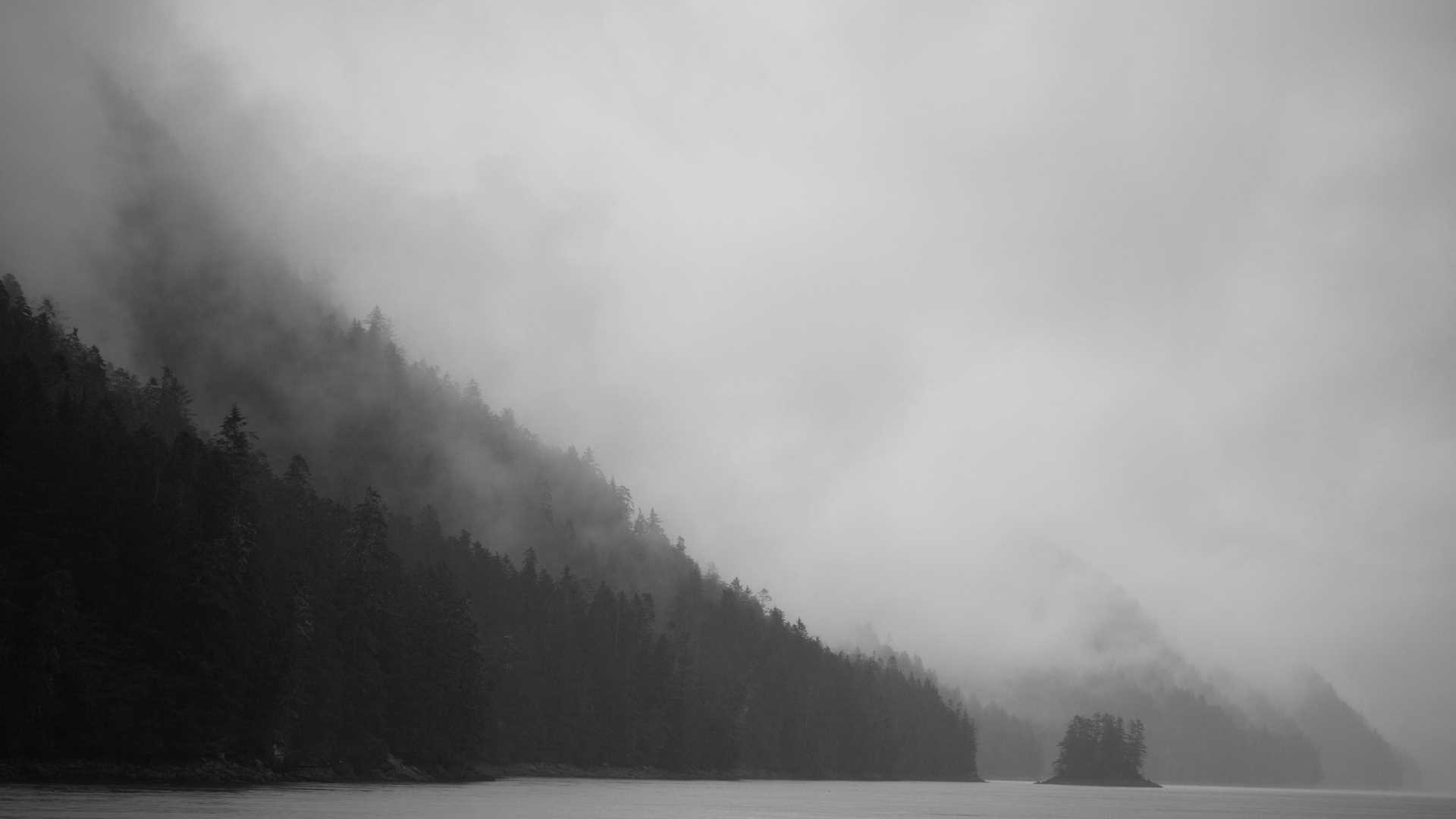

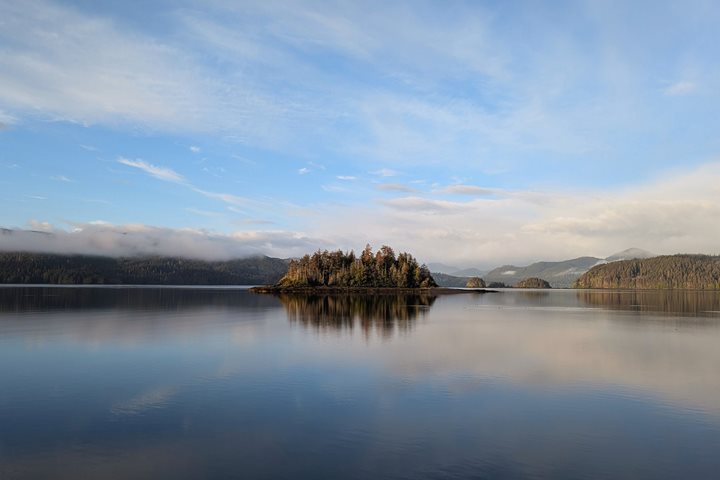
This morning the National Geographic Sea Lion weighed anchor in Khutze Inlet and continued on its north bound journey through the narrow channels of the central British Columbia coast. We took another spin by the old cannery of Butedale (1911-1966) in hopes that the elusive white bear might reveal itself but the rare bear was nowhere to be seen. Princess Royal Island is British Columbia’s fourth largest island (next to Vancouver Island, Graham and Moresby) and was named by Captain Charles Duncan after his sailing sloop the Royal Princess in 1788 while trading for sea otter skins between Haida Gwai, and Princess Royal Island. In the absolute absence of infrastructure, it is hard to imagine what this coastline was once like. Between the sea otter trade, canneries and their respective fishing fleets, the pulp/shingle mill at Swanson Bay and steamships frequenting this coast it was once quite a bustling area relative to today. After going around Gribbell Island we then headed up the long and narrow Grenville Channel where an ancient fault line beneath helped form the landscape surrounding us. Possibly the most dramatic part of the Inside Passage the channel narrowed to about a quarter mile width with the emerald forest seemingly within reach. Both Grenville Channel and adjacent Pitt Island were place names left by Vancouver on his 1793 surveying expedition. William Pitt became the prime minister of England at age 24 and while head of government saw England through one of its most tumultuous periods. Enjoying the calm waters of protected passages, we now approach the wide but shallow Hecate Strait and Haida Gwai!



5/7/2025
Read
National Geographic Sea Bird
Daajing Giids, Haida Gwaii, Hecate Strait
After an evening cruising from SG̱ang Gwaay, National Geographic Sea Bird made one last stop this morning in Daajing Giids to drop off our cultural interpreters, DeeDee Crosby and Grace Garvie. At dock, we had two unique opportunities. The first, our daily morning stretch class had the opportunity to meet on land, and second, we welcomed the incredible artisan, Aay Aay, aboard. We were familiar with Aay Aay, who we had met two days prior as an interpreter at the Haida Heritage Center. His specialty is a revival of traditional Haida weaving. During Aay Aay’s time on board, he shared with us his personal story about discovering and mastering his art with spruce root, cedar, and wool weaving. He taught us how to hand spin the warp threads that would be the beginnings of a wool piece. After an artistic morning, we embarked on our journey across Hecate Strait to reach our next destination along our expedition, Alaska. This evening, I write as we make our way into Dixon Entrance preparing to wake up to the scenery of the famed Misty Fjords in the morning.